

The rise of AI has introduced many conveniences but also many challenges into today’s society. Recent reports from both educators and students emphasize how overuse of ChatGPT in college is making the academic project crumble—frustrated teachers consider retiring, and skeptical students contemplate skipping college for good, as neither group seems to see the point of its role anymore. Meanwhile, the potential ways to address these issues from a traditional academic point of view don’t seem to provide an efficient solution.
Chat GPT in College: The AI Dilemma Facing Today’s Students and Teachers
On the one hand, Gen Z students—a generation inherently immersed in AI—experience it as a double-edged sword: AI indeed offers advantages like practicality and speed, but it can make thinking feel pointless—why would someone bother when the tool does it for them? On the other hand, educators aren’t equipped with the proper set of tools to navigate the AI era, and the current academic structure has failed to adapt. As AI models continue to grow more advanced, some educators worry that the problem could worsen, leaving students “essentially illiterate” if schools don’t keep up—resulting in a generation that needs to rely entirely on this technology.
CNN recently reported that many students are turning to welding and construction work, since they offer good job opportunities without having to invest thousands in college—and this trend has been accelerated by AI’s appearance. The same report revealed that 90% of students use the chatbot to do their homework, as “most assignments in college are not relevant… they’re hackable by AI.” This raises the question: is going to class still worth it?
But this is just scratching the surface, as AI creates a complex, two-sided dilemma. While it’s true that generative AI can jeopardize students’ creativity and capacity to think for themselves, it’s also true that business adoption of AI continues increasing (according to Indeed.com reports). This means that students joining the workforce must be equipped with at least a basic understanding of AI.
This has pushed education into a dead end: either colleges adopt AI, undermining critical thinking, or they keep ignoring the rise of this technology, leaving students unprepared for the workforce. While this may seem like a new issue, the problem of students struggling to launch their professional lives after college has long existed—though AI is making this more evident.
Rediscovering a Solution in the Great Books
These—and previous—issues stem partly from an outdated approach to education based on standardized testing that basically teaches students to memorize rather than helping them develop critical thinking and reasoning skills. This is why studying the Great Books through collaborative Socratic Dialogue and the Montessori approach is a crucial alternative that offers an educational model designed to equip people with a set of skills that adapt to the constantly changing world—while also making them active participants in that change.
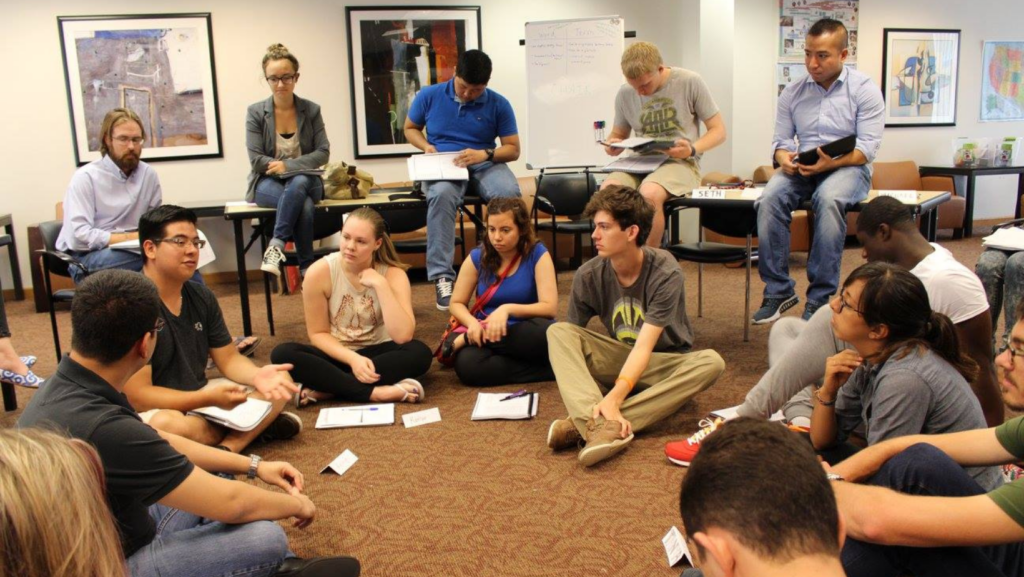
As Reliance College’s founder, Marsha Familaro Enright, and successful brand strategist Malachy Walsh previously discussed, studying the liberal arts through the Great Books unlocks students’ critical thinking, pattern recognition, historical awareness, and philosophical insight—fundamental tools for understanding a marketplace reshaped by AI.
Students trained in the liberal arts tend towards broader, cross-disciplinary insights to their thinking, which helps them navigate ambiguity and discover innovative solutions—something AI-driven systems often can’t easily replicate and that narrow, traditional technical training fails to foster. While AI can process large amounts of data in fascinating ways, understanding why people act, what drives change, and how to shape narratives is a deeply human strength that Great Books help bring out in individuals.
The dialogue and rhetorical skills developed during collaborative Socratic Seminars are precisely the kinds of human-to-human abilities that AI tools cannot replace. These skills also help students judge how to use AI rather than be passively shaped by it. Instead of standardized knowledge that is constantly outdated by the rapid advancement of technology, the Great Books offer an enduring understanding of the world.

Offering an alternative for adapting to the AI era is only one piece of the puzzle when it comes to this educational approach’s value; the second lies in the way collaborative Socratic Dialogue teaches students how to think and enjoy the process of learning together. The experience shows them how joyful learning to reason can be—unlike traditional education, in which students often complain and feel bored or frustrated by how they’re expected to learn.
AI makes traditional education vulnerable because students are not invested in the learning process, unlike the lively engagement in collaborative discussions, in which students’ own questions and interests drive the conversation, giving them a sense of ownership over their learning.
Therefore, instead of condemning AI and forbidding its use, fostering an approach in which students fall in love with learning may gradually wipe out their desire to rely on this tool in a destructive way, because it deprives them of that rewarding experience.
Preparing Students for a Human-Centered Future
One common concern that may arise when discussing a Liberal Arts degree is the cost of the program. Both students and parents can feel skeptical about investing in this type of education, as they believe other careers may be more suitable in today’s marketplace. However, surprisingly, the New York Fed reports that traditional majors like Computer Science, Business Management, and Economics—among others—have seen a decline in employment outcomes, indicating a gradual shift.
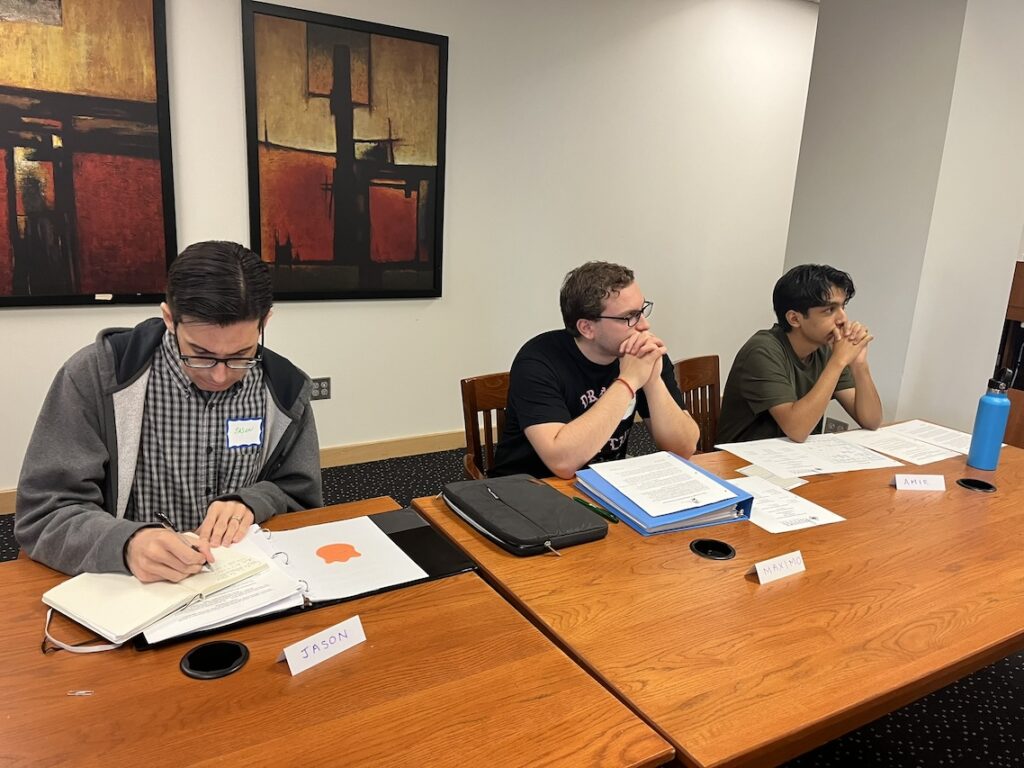
Reliance College combines Great Books discussions with the real-world experiences, such as internships or practical projects, and offers an affordable tuition of $22,000 per year (with various payment plans, financial aid, and scholarships available).
Reliance’s hybrid approach prepares students not just to think, but to apply insights—a balance which is crucial to working alongside AI tools and to seamlessly adapting to the constantly shifting dynamics of various industries. This educational model offers a solution for both educators concerned about how AI is ruining their teaching methods, and students seeking an education that truly equips them with the right tools to join the workforce. The future of education isn’t about banning AI or turning a blind eye to its existence, but about rediscovering the principles lying dormant in the Great Books—the very principles that once made education and society flourish.