

Ten years ago, students who loved literature, history, and big questions were told to be practical. “Learn to code,” everyone said. The humanities were a luxury. The future belonged to programmers.
That advice has not aged well.
In a recent article, “Why big AI labs are hiring so many philosophers“, The Economist reports a remarkable reversal. According to Federal Reserve Bank of New York data, American philosophy graduates are now more likely to be employed than computer science graduates. In 2024, unemployment among computer science grads stood at 7 percent. Among philosophers? Just 5.1 percent.
And who is hiring them? The AI companies themselves. Philosophy students are receiving job offers before they even graduate, and professors are leaving academia for AI labs in such numbers that one Yale philosopher compares it to a hemorrhage.
Why AI Companies Need Socrates
The reasons behind this hiring wave should sound familiar to anyone who knows Reliance College.
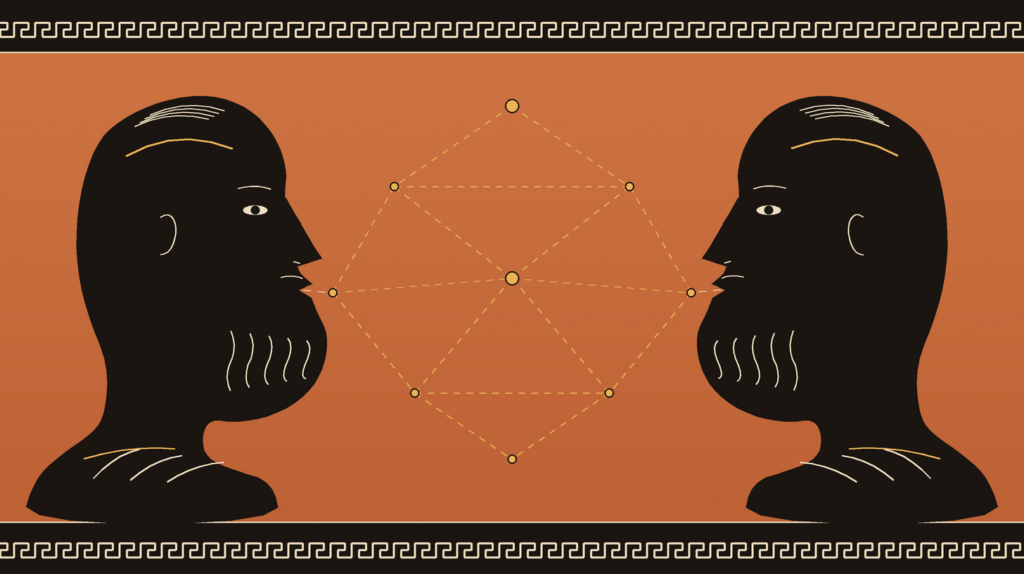
The Economist reports that AI labs are turning to the Socratic method, the ancient practice of disciplined, sequential questioning that reveals the implications of an idea, as well as exposes contradictions. Modern AI systems, it turns out, have a bad habit of telling people what they want to hear. Researchers have found that models trained in Socratic questioning become less inclined toward flattery and more committed to pursuing truth.
Then there is what philosophers call Socratic ignorance. In Plato’s “Apology,” Socrates famously locates his wisdom in knowing how much he does not know. AI researchers are now building that same intellectual humility into their models to combat overconfidence and reduce fabricated answers.
Think about that. The most advanced technology companies on Earth, with virtually unlimited resources, have concluded that the tools they need most were forged in Athens 2,400 years ago.
This is the same insight behind our AI Proof U™ certificate program: the surest way to thrive alongside artificial intelligence is to strengthen the powers of mind that no machine can replace.
The Deepest Questions Are Now Business Questions
The article goes further. AI companies are wrestling with the fundamental questions of ethics: Should a system follow firm moral rules, in the tradition of Kant? Or should it weigh costs and benefits to produce the best outcomes? These ancient debates between deontology and consequentialism now shape how self-driving cars handle unavoidable accidents, how chatbots protect vulnerable users, and how AI “constitutions” are written to keep powerful systems honest and safe.
In other words, the questions our students grapple with in seminar, What is right? How do we know? How should we live?, are no longer confined to the classroom. They are being asked in boardrooms and engineering labs, with billions of dollars and human lives at stake.
Not everyone in the field is optimistic. One AI theoretician quoted in the piece claims that morality is “historically unstable and culturally variable,” little more than shifting custom. We disagree. If morality were merely a matter of time and place, there would be nothing for these philosophers to figure out and no reason for AI labs to hire them. The very fact that companies are working so hard to build honesty, consistency, and respect for persons into their machines testifies to something deeper: moral truths are real, grounded in the facts of human life, and discoverable by reason. What the moment demands is not resignation to relativism but minds trained to identify what is objectively right and why.
The Economist’s conclusion is blunt: there is no shortage of work for philosophers of AI.
Our Programs are Built for this Moment
At Reliance College, we never accepted the false choice between a “practical” education and a meaningful one. Our entire approach rests on a conviction the AI industry is now discovering for itself: the ability to reason clearly, question rigorously, and judge independently is the most practical skill a human being can possess.
Our students study the greatest thinkers in history, not as museum pieces, but as living guides to the hardest problems, including the ones no one has encountered yet. Through our Guided Collaborative Discussion method, they practice exactly the kind of disciplined questioning that AI labs are now paying philosophers to teach machines. They learn to spot contradictions, clarify meanings, follow an argument wherever it leads, and know the limits of their own knowledge.
Here is the irony worth savoring: while machines are being trained to imitate Socratic reasoning, most schools have stopped teaching it to human beings. Students memorize material, take the test, and move on, with little help developing the reasoning powers that employers, and life itself, actually demand.
That is also why we created AI Proof U™ , our 10-week hybrid certificate program. In a compact, flexible format, it delivers the very training The Economist describes AI labs paying a premium for: rigorous reasoning, Socratic discussion, and the judgment to use powerful new tools wisely instead of being used by them.
Here is the irony worth savoring: while machines are being trained to imitate Socratic reasoning, most schools have stopped teaching it to human beings. Students memorize material, take the test, and move on, with little help developing the reasoning powers that employers, and life itself, actually demand.
The Truly Future-Proof Education
The lesson of The Economist’s article is not that everyone should major in philosophy. It is that the skills of the philosopher, clear thinking, honest questioning, sound moral judgment, intellectual humility, are the skills no technology can replace. They are also the skills that let you direct a technology-saturated world rather than be directed by it.
That is what we cultivate every day at Reliance College, in our seminars, in AI Proof U™ , and in everything we do. We are educating people who can think for themselves, judge for themselves, and build lives of purpose in a world changing faster than ever.
The coders were told they were safe. The philosophers were told they were obsolete. It turns out the deepest education is also the most durable one.
Ready to AI-proof your mind? Enroll in AI Proof U™ , our 10-week hybrid certificate program, or click here to learn more.