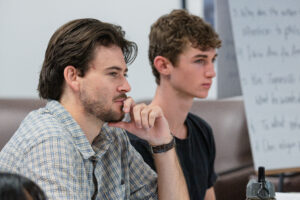


A guest post by Allison Quatrini, associate professor of political science at Eckerd College, who spent a week observing the 2026 Great Connections Seminar.
“What is the only authority in the room?” There was a pause that felt almost too long, until I remembered that silence was desirable and even necessary in a seminar such as this one. When the participants still didn’t respond, the instructor announced, “Reason is the only authority in the room.”
I took note at that moment. In the traditional education system, one in which the instructor transmits knowledge and the students receive it, the instructor is the final authority. In this seminar, however, even the instructor subordinates herself to a higher ideal: reason. As a result, something profoundly special takes place in such a classroom, something that I experienced for the first time at the Great Connections Seminar at the University of Illinois at Chicago.
The purpose of this article is not to outline why Socratic Practice, the pedagogical methodology of the Great Connections, is an effective method of instruction. Other authors, particularly Michael Strong, have cogently made the argument that Socratic Practice allows participants to strengthen their own judgment and reasoning, which not only improves their academic performance, but also their lives as a whole. Rather, what I will do is describe the transformation that took place within me, one that has completely altered the way I will approach my courses at Eckerd College where I teach political science. Ultimately, my participation in the Great Connections Seminar has made me a better educator, listener, and person.
Since the onset of the COVID-19 pandemic and up to the present, I’ve been disappointed in my classroom experience. I’ve found myself repeating the same lectures with the end goal of simply making it through the class session. For more than a half a decade, I’ve looked out at a sea of screens, wondering if anything I’m saying is landing, if anyone is paying attention. I’ve had the sense that students are bored with mainstream education. Worse still, I’ve become bored with the traditional system. That I would be bored in my own classroom with my own material is of great concern to me. First, if students note an instructor who is disinterested, then they don’t have much reason to be invested in the course. Second, I chose higher education as a career to escape the possibility of boredom in my working life. I consider myself a lifelong learner, and to me there is nothing better than a book. However, I’ve found myself barely looking at the texts as I crafted another lecture and set of activities that I know will work in the short term but that I’m not enthusiastic about. As an antidote, I requested to observe the 2026 Great Connections Seminar to learn how I might foster improved learning outcomes for my students and myself. After spending a week with veteran instructors and students, I now have a completely different outlook on reading and discussion.
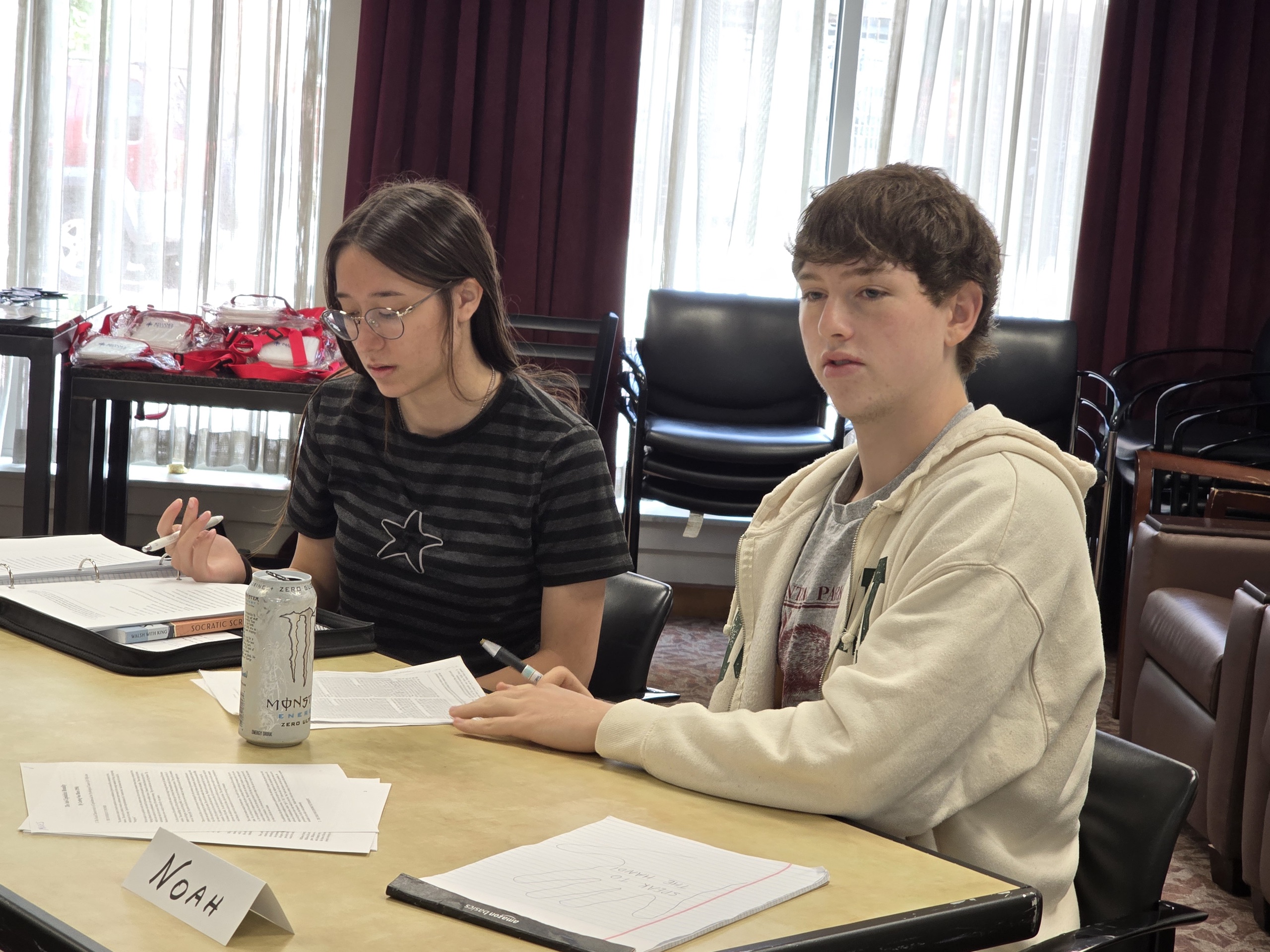
The first change that I plan to make in my own teaching is to shift the responsibility of understanding challenging texts from me to the students. The manner in which the four instructors began seminar each day positioned the participants to think for themselves about plausible interpretations of the text rather than wait for an authority figure to provide the correct answer. The participants were to come to the discussion with questions about the text, from the meaning of a particular paragraph to how the author used a certain term to the nature of the argument itself. In small groups, they decided on which question was most in need of an answer, and then I wrote them on a large pad situated on an easel. At no point did any instructor state that one question was better or more important than another. Furthermore, none of the instructors indicated that students were focusing on trivial matters in the text rather than the main argument. It was left to the students as to how to proceed. There were moments when the students grasped the meaning of the text, but there were other moments when I left seminar thinking that students had missed the point entirely. Nonetheless, I saw the wisdom in this approach: they might return to these texts one day, and their experience in missing the point the first time could be instructive in helping them grasp it in the future.
Second, I’ve learned how to guide students in deciphering meaning from texts without providing an interpretation myself. Although I attended the seminar as an observer, by the end of the week, I began facilitating some of the discussions. While exploring Ludwig von Mises’ “The Anticapitalist Mentality,” students were wrestling with what it might mean to transfer the means of production to the masses. One participant devised a hypothetical example in which the state dictated the amount and color of tables to be produced but then struggled to contrast it with what the same example would look like under capitalism. I noticed her difficulty and said, “So, in a system where the means of production is transferred to the masses, who gets to make the tables?” She and a few others responded, “Anyone.” Had I simply made the connection for the students, it might have been momentarily clear to them, but they wouldn’t have learned anything from it. Using the appropriate guidance, though, students can discover the meaning for themselves. I’m not sure whether the participants will remember that exact connection, but I’m more confident that they’ll remember the process by which they arrived there. In this sense, they’ll have a tool that they can use in any academic context.
Third, I will make changes regarding the texts in my courses. For example, when I teach Introduction to Comparative Politics this coming spring, I will develop a syllabus entirely based on foundational texts such as Max Weber’s “Politics as a Vocation,” Benedict Anderson’s “Imagined Communities,” and Robert Dahl’s “Polyarchy.” I currently teach some classic texts, but I’ve come to realize that I don’t ask students to decipher much meaning from them. I’ve had reservations about revising my syllabus in this way: won’t the more challenging language be difficult and boring? At first, it’s possible that will be the case. But what’s crucial, and something that I observed at the Great Connections Seminar, is that the discussion leader must first believe that the student can read and discover meaning in difficult texts. Upon reflection, it seems that my class format implicitly contains a lack of belief in students: if I don’t place much of the burden on them to determine the text’s meaning for themselves, I may in fact be suggesting that I’m not confident that they can. I’m excited to make a change in this regard during the coming academic year.
I’ve also noticed a key change in my life outside of the classroom: I’m becoming a better and more intentional reader. Recently, I’ve found myself reading a book just to finish it and then being unsure as to what I’ve gotten from it. Often, I’ve been in the middle of a book only to think about what I’ll read next! Now, when I read fiction, I read more slowly to immerse myself in the story and think about how it connects to my life. I’m becoming far less concerned with how many books I finish. In terms of course texts, I’m now approaching them not with the end goal of finding three main points to communicate, but rather with the intention of finding important meaning and something different from the last time I read the text. In this sense, I’m genuinely excited to return to old texts, both in my working and leisure time.
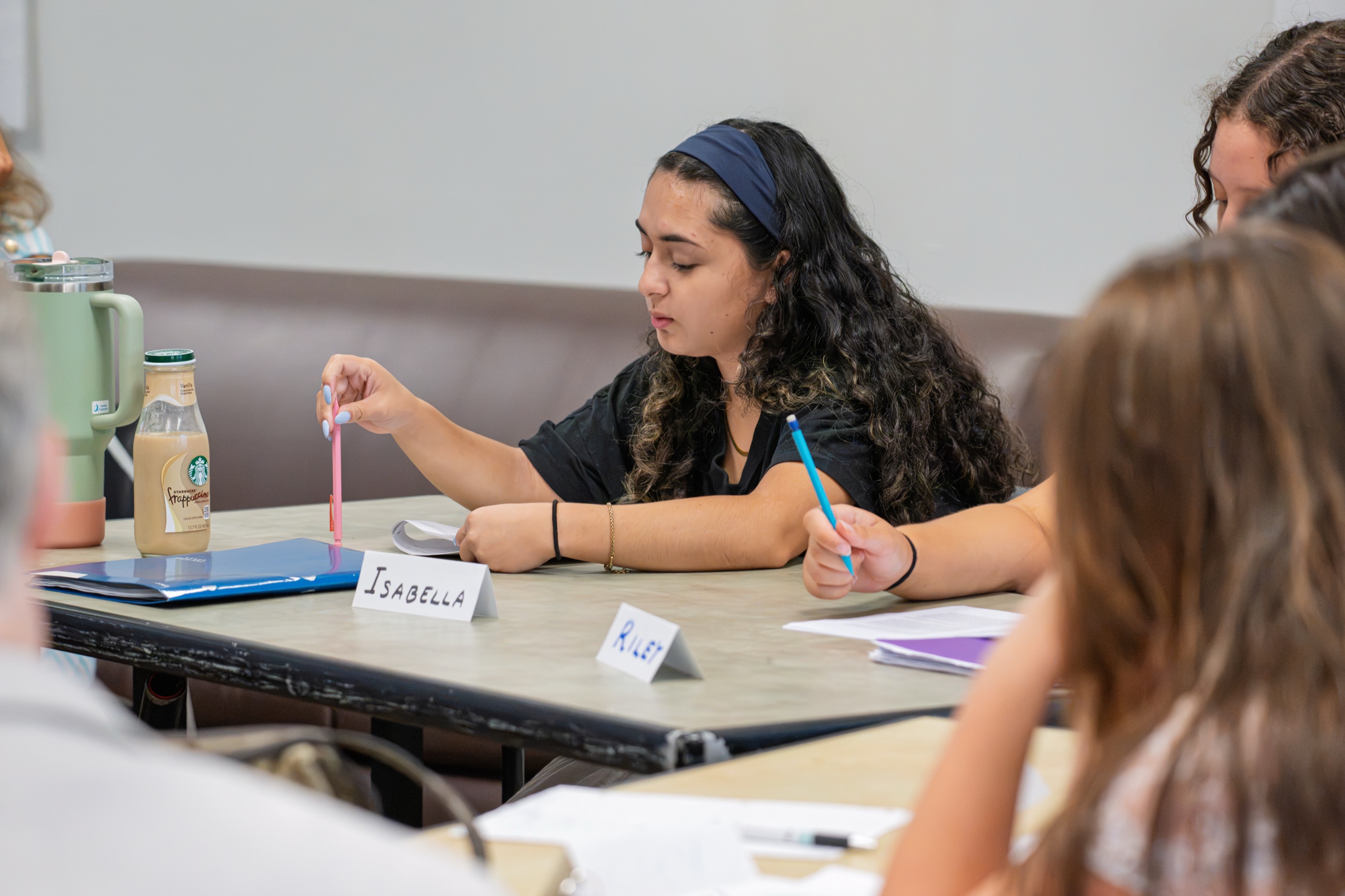
Relatedly, I was able to incorporate my new realization regarding “finishing” during one of the discussions. When hearing students talk about “finishing” all the discussion questions they generated, I told them to not worry about “finishing”: people have been thinking about these texts for years now, and so, in this sense, there is nothing to “finish.” The discussions contribute to an ongoing conversation, one that we are now a part of. There is an intentionality to this intellectual lifestyle that I’ve wanted to cultivate for a long time. I have finally found a way to do that in my working life.
Ultimately, though, the seminar has put me on the path to becoming a better person. I’ve learned how to be more present with people, really listening to them rather than thinking about what I’m going to say next. In the past, I’ve facilitated class discussions by affirming what students say, generating additional comments to build on what they’ve just said, and then moving on to the next speaker. I’ve come to realize that if I’m continually thinking about ways to build on what others have said, I’m not listening to them. In these seminars, however, my role as the facilitator is not to add many more thoughts to what the other participants are saying. Rather, my role is to ask more questions to bring participants to a higher level of thinking. To accomplish that end, I must listen.
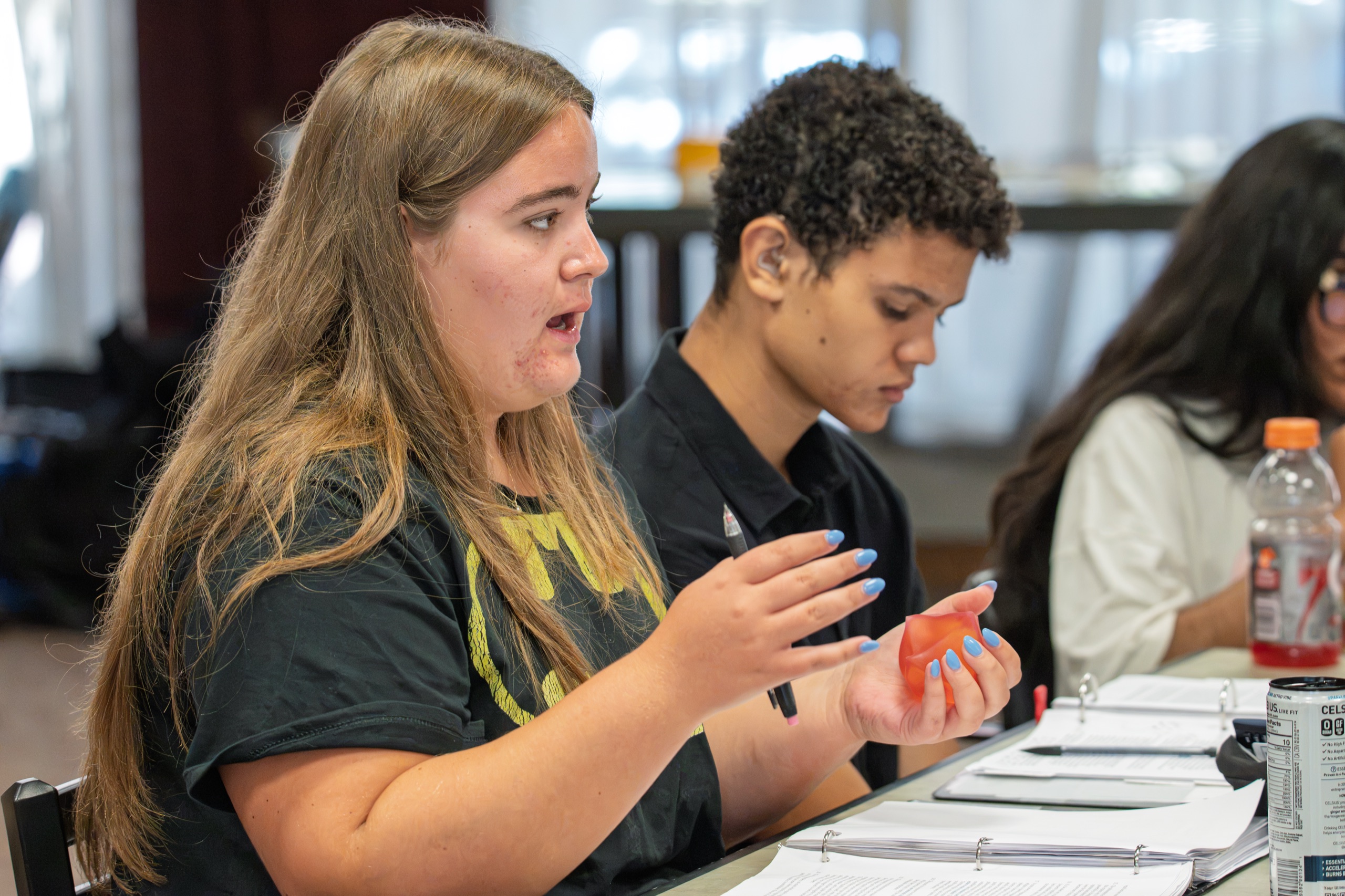
Furthermore, I’m moving away from thinking about myself in terms of traditional academic ranks, such as tenured and untenured professors. During a break, I was commenting to one of the facilitators that no one is concerned with the fact that I’m a tenured professor. I’m not entirely sure how many of the Great Connections participants even knew. I also noted that we were all on a first name basis with one another, something that would give me some pause in a traditional education system. Nonetheless, I never felt disrespected. I suspect the reason is that the respect we have for one another doesn’t stem from titles and degrees. Rather, it stems from our conduct toward one another and ourselves, such as adequate preparation for the discussion and active listening. Respect is given because it’s earned: we’re all part of a team that is working together to understand a difficult text. Respect is contingent on behaving as a good team member. As a result, I’ve come to see that respect built organically from genuine human interaction is more valuable than imposing it from the top using titles.
Despite my enthusiasm for engaging in this method of instruction this coming academic year, I would be deceiving the reader if I didn’t admit some reservation. One question I’ve continually asked myself is: what happens if students leave the classroom without any understanding of the text? For example, in “Politics of Vocation,” Weber presents his definition of the state. This concept is key in comparative politics, and I would like students to be able to articulate Weber’s definition by the end of the class session. What if we never even locate the place in the text where Weber states his definition? However, if students are to develop their own judgment regarding difficult texts, then this is an outcome I will need to accept. I’m no longer in the classroom to transmit knowledge—I’m demonstrating to students how to learn.
Most importantly, it occurs to me that Socratic Practice has the power to change the world. If all of us adhere to the principles of inquiry, argument, and active listening, it would radically transform how we interact with one another. When there is so much animus in the political discourse, Socratic Practice is needed more than ever. In addition to providing a quality education, it is also the road to peace, understanding, and a good life. It is my hope that more students and educators can experience this life-changing approach to learning and living.
Allison Quatrini, MIPA, Ph.D., is an associate professor of political science in the Behavioral Sciences Collegium at Eckerd College. She observed the 2026 Great Connections Seminar.