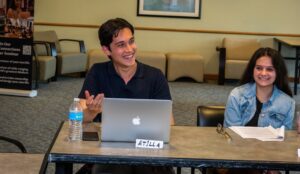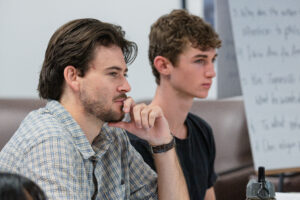


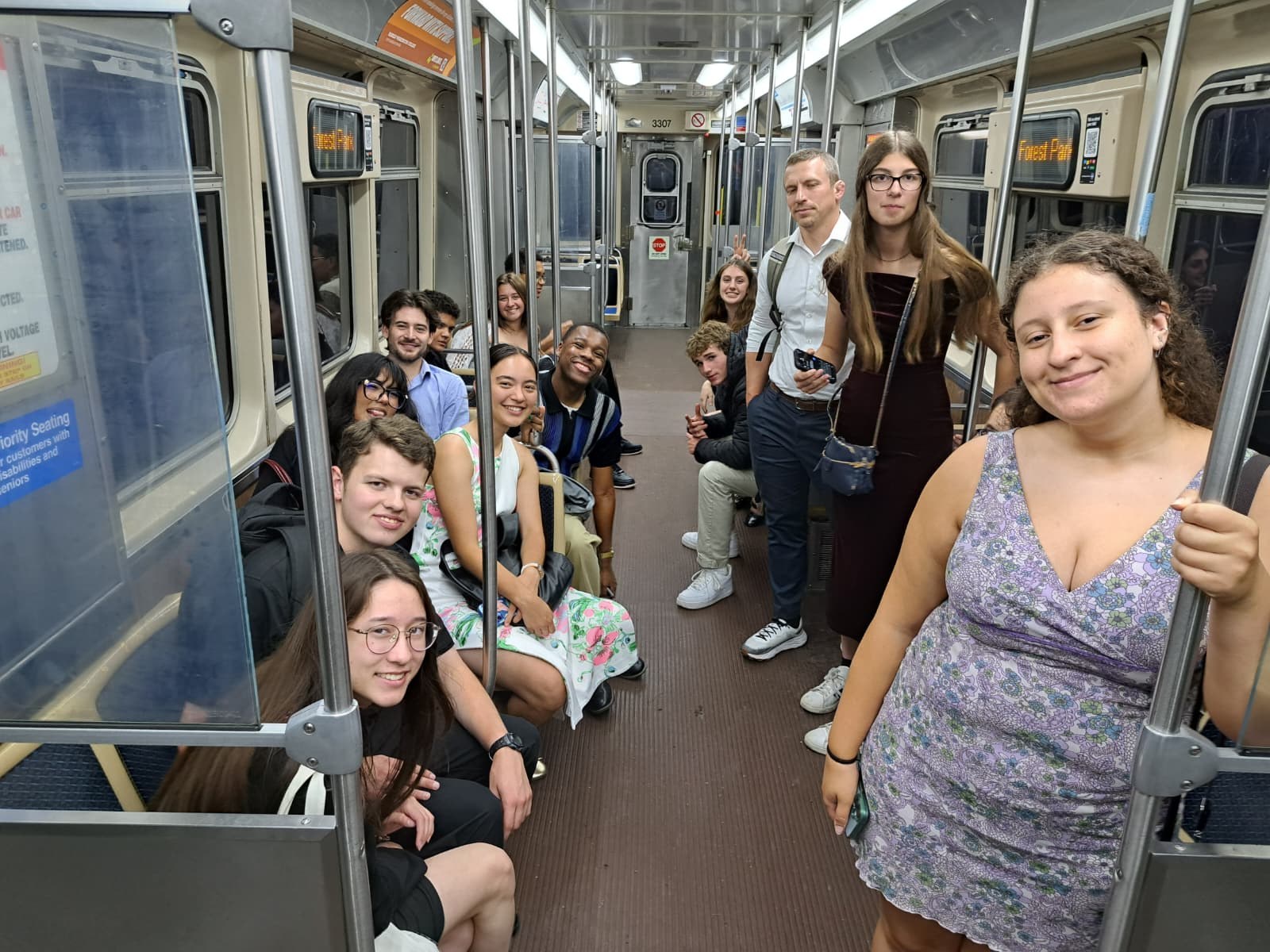
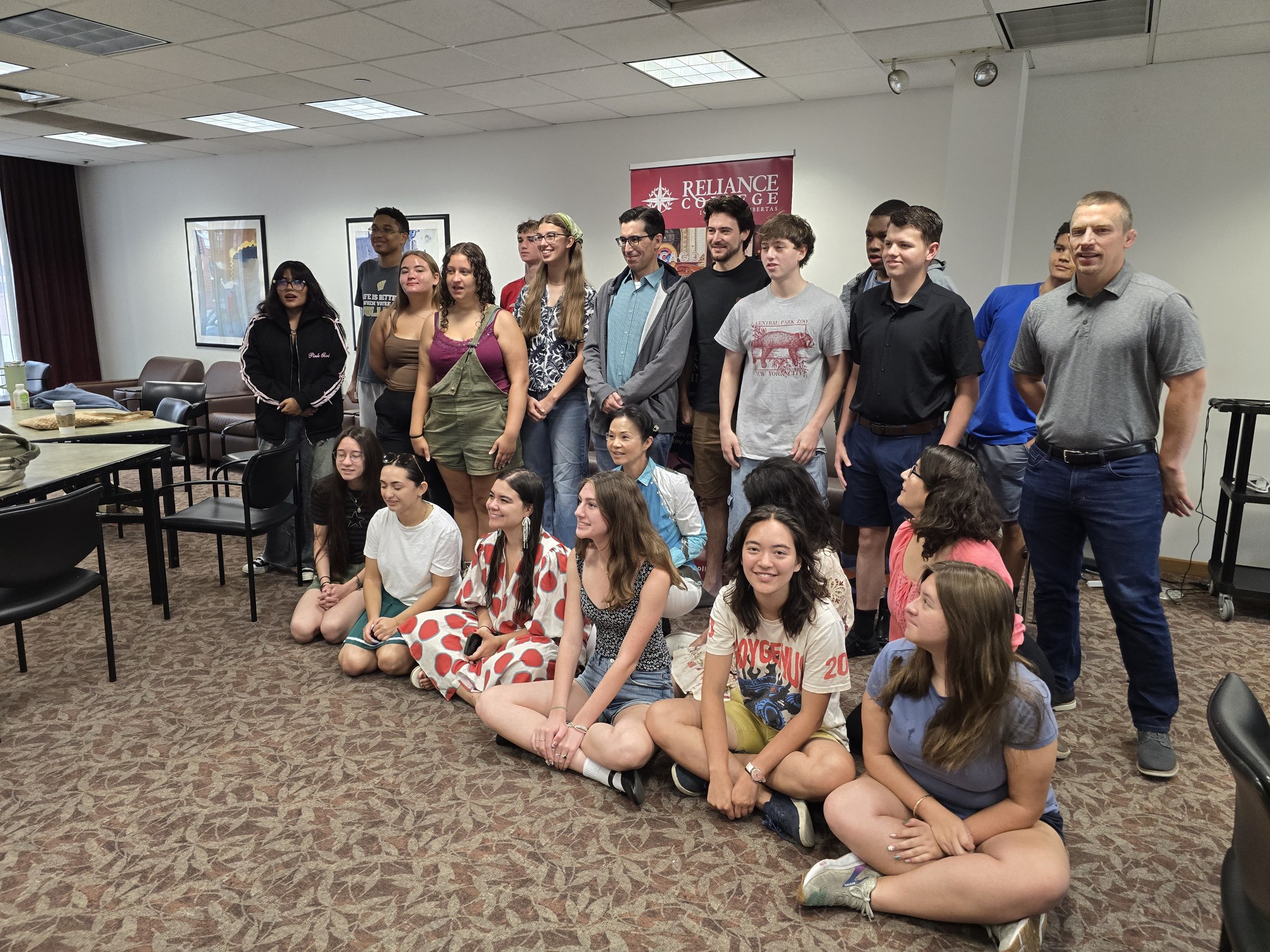
The 17th Great Connections Summer Seminar was our largest cohort in years, and our most intellectually and geographically diverse. Nineteen students, ages 16 to 24, spent eight days at the University of Illinois at Chicago, from July 25 to August 1, living in dorms on campus. Seven of them told us they want to come back next summer and bring their friends.
Students came from as near as Phoenix and Baton Rouge, and as far as Colombia, Armenia, and Australia. We had thirty-three applicants. Not all of them were able to attend, because of visa issues or an inability to pay for transportation.
What you read at a great books summer seminar
Following our theme of “Reason and Love” (which has consistently been a big draw with young people), our readings ranged from Aristotle’s Nicomachean Ethics to Emily Dickinson’s “Wild Nights,” Mises’ The Anti-Capitalistic Mentality to Tocqueville’s “The Philosophy of the Americans” (both of which, believe it or not, are related to love!), Jonas’s “To Move and To Feel,” to Ortega y Gasset’s “The Role of Choice in Love.”
We also discussed the students’ conceptions of “what is love,” the basic nature of the mind, how to introspect to learn more about one’s own, and the nature of creative thinking in Koestler’s “Thinking Aside” in his Act of Creation. Koestler and my paper on “The Psychology and Practice of Introspection” were many of the students’ favorite readings. Students also examined common logical fallacies and applied them to various pieces of writing.
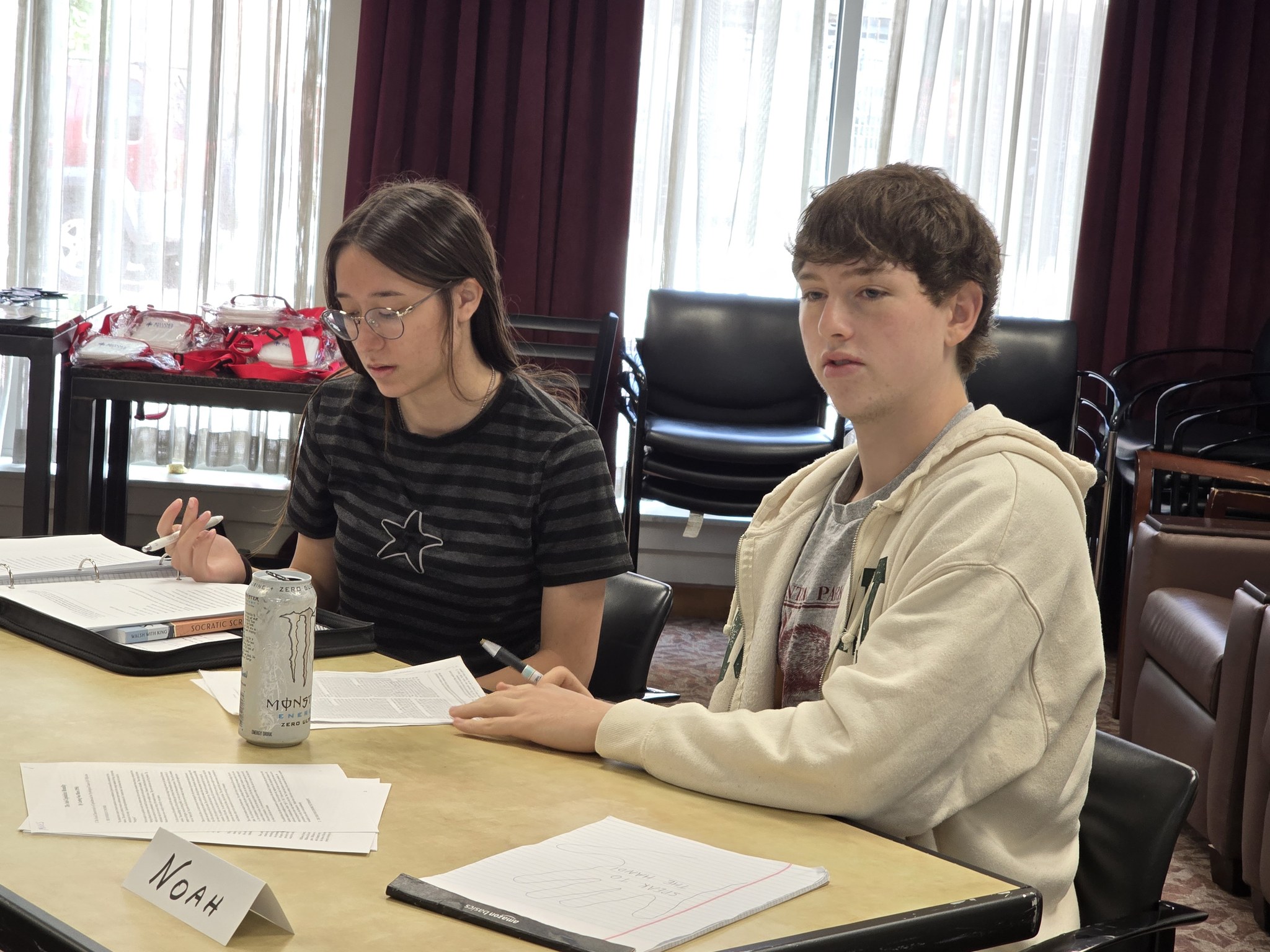
Once again, we used the wisdom from Walsh’s Socratic Scribbling: Great Ideas from Great Books That Will Help You Think and Write to communicate the importance of effectively collecting and organizing one’s ideas in order to write well. This method avoids the writer’s block most people experience.
Cyrano in black and white
And we watched “Cyrano de Bergerac” with José Ferrer. In this age in which the young are bombarded with cynical irony and piece after piece seeks the clay feet of heroes, I am always concerned about how young people will experience artwork from the era of high Romanticism, and a 1950’s performance in a black and white movie at that.
During the showing, the students were utterly silent and absorbed from the first scene throughout the film. And enthusiastically interested in discussing it afterwards. It just goes to show us how much youth is seeking a grand vision of life, heroes, and beautiful language to express thoughts. Corbin Fell, from Australia, told me he was eager to tell his parents about the movie because he thought they would enjoy it.
Career talks: a physician and a tech founder
As part of our efforts to introduce young people to the wide variety of professions in the world, Nancey Trevanian Tsai, MD joined us from South Carolina. She trained in orthopedics and was part of the neurosurgery department at the Medical University of South Carolina, and she works with Kandu’s stroke recovery program. She gave a detailed and thoughtful presentation of how she got from unfavored first child, as a girl, in Taiwan to the heights of the medical profession and more. Students found it highly moving and informative for their own lives.
We were also privileged to hear from Bruce Burdick, formerly one of the principals at Integra Financial and now a founder of Conceptron AI. Bruce recounted the fascinating story of how he landed in the tech world, given his deep knowledge and interest in music, and how he and his Conceptron team are building a new AI system from the ground up, to be carefully conceptually constructed.
Both Nancey and Bruce were very patient and generous with their time, answering question after question from students.
How a Socratic seminar actually works
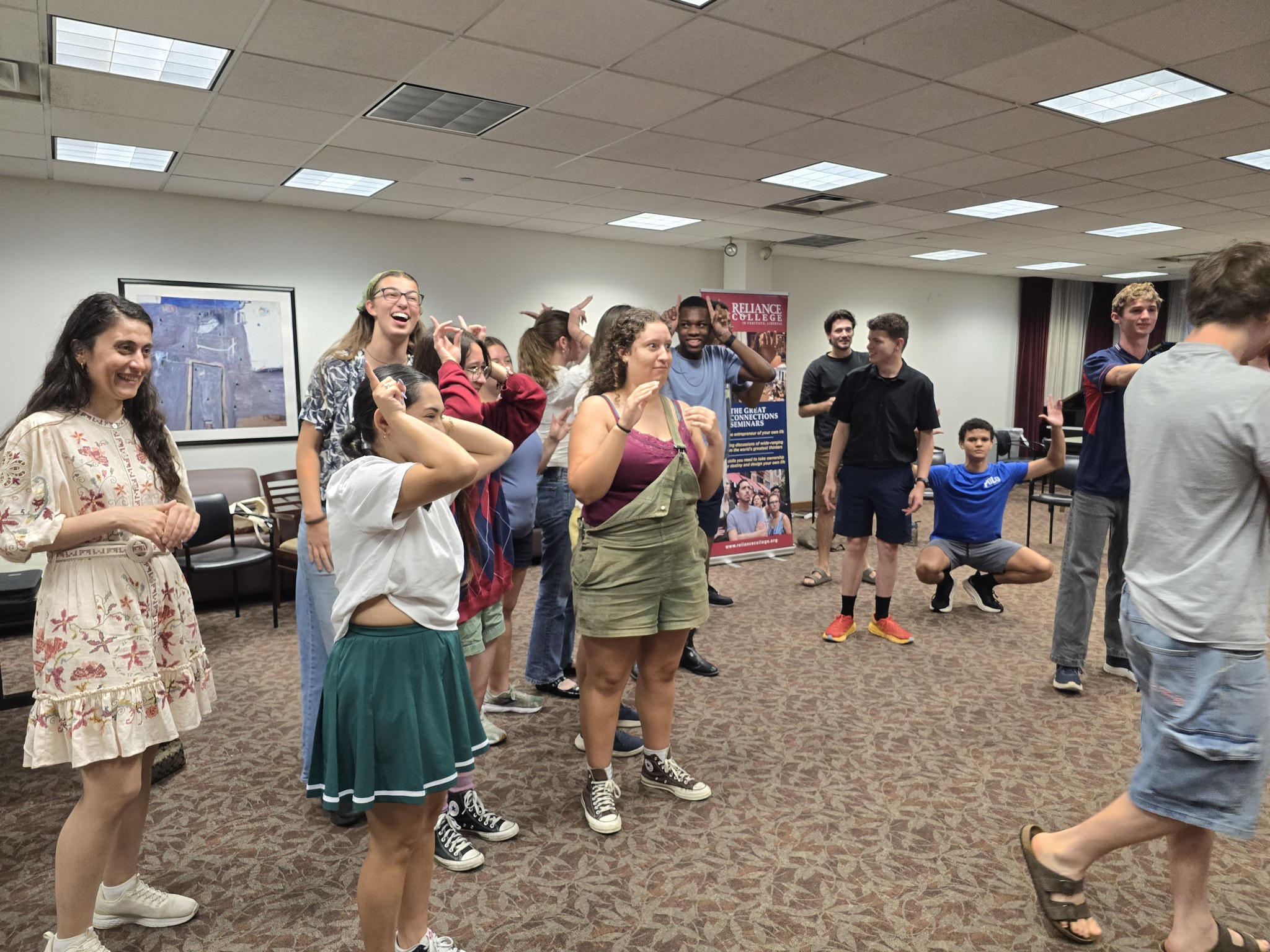
Early in the week we went on an Architectural Scavenger Hunt and played improv comedy games, for fun and to build camaraderie, but also because the first rule of improv reinforces the most basic principle of our collaborative seminars. The principle is: listen carefully to what the other person says and work to understand and grow the ideas from their thoughts. This principle is crucial to productive conversations in which people come to an actual understanding of what each other means. And it is important to discovering the truth in ordinary life, no matter what topic is discussed.
This practice is a critical value of the seminar, and one which our students highly appreciated. They reveled in an environment in which they could civilly, respectfully, and thoroughly talk about ideas and come to real understanding. And our alumni testify to its enormous value in their work.
Students’ post-seminar self-evaluations showed that they were elated and energized to experience the challenge of discussing ideas, in and out of class, in such a civilized environment.
What past students told Mannkal
We get Australian students from the Mannkal Economic Education Foundation every year because Mannkal’s founder, Ron Manners, learned from previous students that ours was by far the best experience they had.
What students gain from a week of great books
Student by student, we transform lives by strengthening their reasoning, knowledge, communication skills, and self-confidence. These students go back to the world, empowered to turn the tide away from collectivism and towards reason, individualism, and freedom.
The program powerfully prepares students to think and understand for themselves. They don’t get this help at school, so they return to refresh and expand their knowledge. Imagine how helpful this is to students (and their parents) who attend before investing tens to hundreds of thousands of dollars at colleges.
The seven principles behind the seminar
These life-enhancing principles are embedded in our entire program. We:
- Require evidence and reasoning for all we think and argue.
- Identify our ideas and whether they’re based on facts and sound reasoning.
- Find the cash value of our ideas by consistently connecting our abstractions to concrete reality.
- Respect the autonomous, reasoning minds of others.
- Recognize that each individual lives for his own sake, to achieve his highest well-being.
- Strive for our best achievements and most heroic accomplishments, and seek models in every human sphere.
- Treat others as traders, offering value for value, in the spiritual as well as material sphere.
Because our methodology properly implements these principles in our program’s micro-society, they bring out the best in each student and strengthen his or her understanding of reason, individualism, and freedom. You can read more about our summer seminars and how to apply.
We’ll be posting much more on our website and social media: Facebook, Instagram, LinkedIn and X. In the coming months you can see many additional pictures and videos of the students’ discussions and individual interviews with them.