

How does one man run five companies at once, in industries as different as rockets, cars, and social media?
Venture capitalist Marc Andreessen recently answered that question on Chris Williamson’s Modern Wisdom podcast, describing how Elon Musk actually operates. The method is startlingly simple. Every week, Musk shows up at each of his companies, identifies the single biggest problem that company faces that week, and fixes it. Then he does it again the next week. Fifty-two weeks later, each company has solved its fifty-two biggest problems of the year.
Meanwhile, as Andreessen wryly notes, most large corporations are still scheduling the planning meeting for the pre-planning meeting for the board presentation.
Whatever you think of Musk personally, the method deserves attention, because it is not really a management technique at all. It is a way of thinking. And it is a way of thinking that our education system has almost entirely stopped teaching.
An Old Idea, Not a New One
Andreessen points out that this operating style is not an innovation. It is how the great industrialists of the late 1800s and early 1900s ran their enterprises: Henry Ford, Andrew Carnegie, Thomas Watson of IBM. These were leaders totally devoted to understanding, deeply and first-hand, what their companies actually did. They were in the trenches. They talked directly to the people doing the work. They served as the lead problem solvers of their organizations.
Andreessen says he knows of no other current CEO who operates this way. That should trouble us. The knowledge and character that built American industry did not disappear by accident. Somewhere along the way, we stopped cultivating them.
Thinking in Essentials
Look closely at what the method actually requires.
First, it requires identifying the bottleneck: the one constraint that is holding everything else back. In any production chain, something is always the limiting factor. Finding it demands the ability to survey a staggeringly complex operation and distill it to its essential. That is not a personality trait. It is a trained capacity for abstraction and prioritization, the skill of asking, “Of all these facts, which one matters most, and why?”
Second, it requires first-hand knowledge. When Musk finds the bottleneck, Andreessen explains, he does not summon the VP for a report to be reviewed in three weeks. He goes directly to the individual engineer who actually understands the problem and works through it alongside them, at the keyboard or on the manufacturing line, overnight if necessary. He goes to the source: the person closest to reality. No wonder engineers who care about their work describe the experience as the best of their careers. Competence is being seen, respected, and engaged directly.
Third, it requires the confidence to delegate everything else. Once you have identified the essential, everything else is, by definition, running better than the bottleneck. You can trust capable people with it. That confidence only comes from genuine understanding; leaders who don’t understand their business micromanage everything because they cannot tell what matters.
Identify the essential. Go to the facts first-hand. Judge independently. Act. This is not an MBA toolkit. It is the reasoning method philosophers have taught since Socrates walked the Athenian agora asking, “What, exactly, is the real problem here?”
What Business School Teaches Instead
Here Andreessen makes his sharpest point. Business school teaches management as a generic, interchangeable skill: whether you run a soup company or a rocket company, you learn the same processes, meeting cadences, compliance procedures, and conflict-resolution frameworks. Useful skills, he grants. But they are not the thing. The thing is deep, specific, first-hand understanding, and the reasoning power to act on it.
This is the same substitution we see throughout modern education: process in place of understanding, credentials in place of knowledge, memorized answers in place of trained judgment. Students learn to take the test, check the box, and move down the conveyor belt. Then we wonder why so few graduates can walk into a messy real-world situation, identify the essential problem, and solve it.
Educating Problem Solvers
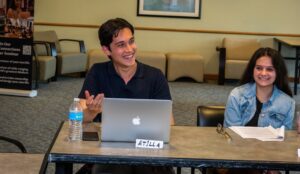
At Reliance College, this kind of thinking is precisely what we cultivate. Our Guided Collaborative Discussion method trains students to do what Musk does instinctively: define the problem precisely, distinguish the essential from the incidental, follow the evidence first-hand, and judge independently rather than deferring to titles and hierarchies. Our students study the greatest minds of history, including the thinkers who shaped the industrialists’ world, not to memorize them but to reason alongside them.
You do not need a Gulfstream to work this way. You need a trained mind. That is what our AI Proof U™ certificate program builds in ten weeks for professionals and business owners, and what our Leap Year cultivates over nine months in young people just starting out.
Fifty-two solved problems a year begins with one skill: knowing how to think. Come learn it with us.