

What makes an entrepreneur? Ask most people and you’ll hear about capital, connections, or a high tolerance for risk. Ask the economist Israel Kirzner and you’ll get a very different answer: alertness.
Kirzner, who taught at New York University for decades and studied under Ludwig von Mises, spent his career answering a question that mainstream economics had quietly ignored. Textbook models describe markets as if all the relevant information were already known: consumers maximize, firms optimize, and prices settle into equilibrium. But if everyone already knows everything, who actually changes anything? Who notices that a product is missing, that a price is wrong, that a resource is being wasted?
Kirzner’s answer, developed most fully in his 1973 classic Competition and Entrepreneurship, is that the driving force of the market is the entrepreneur, and the essence of entrepreneurship is the discovery of opportunities that others have overlooked.
Alertness, Not Just Calculation
Kirzner drew a sharp distinction between two kinds of thinking. The first is economizing: taking your goals and resources as given and calculating the best way to allocate them. This is what spreadsheets do, what management consultants do, and increasingly, what artificial intelligence does extraordinarily well.
The second is what Kirzner calls an “entrepreneurial alertness”: noticing that the framework itself is incomplete. The alert mind spots the apple selling for one dollar in one market and two dollars in another, the customer need no one is serving, the better use for a resource everyone else takes for granted. That gap was sitting there in plain sight, but the entrepreneur is simply the first person to see it.
This is why, according to Kirzner, entrepreneurship doesn’t necessarily require any capital at all. The person who discovers a genuine opportunity can borrow, partner, or presell their way into acting on it. What cannot be borrowed is the discovery itself. Profit, on this view, is not simply a return on money invested or labor expended. It is the reward for perception, for seeing a piece of reality more clearly than everyone else.
Why This Matters Beyond Economics
For those of us who care about reason and human flourishing, Kirzner’s theory carries a deeper implication. It locates the source of prosperity not in resources, luck, or policy, but in the active, independent, judging human mind. Building on Friedrich Hayek’s insight that knowledge is dispersed across millions of individuals, Kirzner showed how free markets reward the people who notice what others miss, and in doing so continuously coordinate that scattered knowledge into a functioning economy.
Alertness cannot be commanded, subsidized, or automated into existence. It flows from a certain character: curiosity about how the world actually works, the confidence to trust your own judgment when it departs from conventional opinion, and the initiative to act on what you see. These are not traits people are simply born with. They are cultivated, and they are cultivated by a particular kind of education, one that trains students to think for themselves rather than to repeat what they’ve been told.
Which brings us to the moment we’re living through right now.
The Age of AI Is the Age of the Entrepreneur
Artificial intelligence has mastered the first kind of thinking. Given a defined problem, it calculates, drafts, codes, and optimizes at a speed no human can match. Millions of workers are watching tasks they trained for years to perform get absorbed by software, and they’re asking a reasonable question: what’s left for me?
Kirzner gives us the answer. What’s left is everything AI cannot do, because it isn’t a matter of processing known information. AI operates brilliantly inside a given framework. It does not notice that the framework is wrong, that a question hasn’t been asked, that a market gap exists which no dataset describes because it hasn’t happened yet. Alertness, independent judgment, and firsthand perception of reality remain irreducibly human. In an economy where calculation is cheap, discovery becomes the most valuable skill there is.
The people who thrive in the coming decades will not be the ones competing with AI at optimization. They will be the ones using AI as a powerful tool while supplying the one thing it lacks: the entrepreneurial alertness that sees what to do with it.
Becoming AI Proof
That conviction is the foundation of AI Proof U™, Reliance College’s 10-week hybrid certificate program. The premise is simple: you cannot make your career AI proof by memorizing more content, since content is exactly what AI reproduces best. You make yourself AI proof by developing the capacities Kirzner identified as the engine of economic life: independent thinking, sound judgment, clear communication, and the alertness to spot opportunities others walk past.
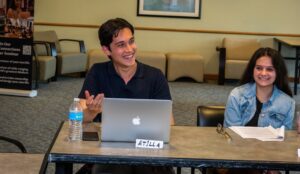
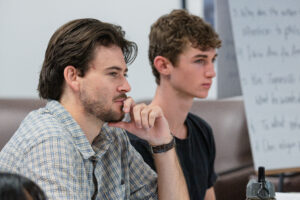
Through the Collaborative Socratic Discussion method that Reliance College has refined over decades of seminars, participants don’t sit through lectures about critical thinking. They practice it, live, in structured dialogue with sharp minds, testing their reasoning against reality and against each other. They learn to work with AI tools from a position of command rather than anxiety, directing the technology instead of being displaced by it.
Our first full cohort has already completed the program, and the next cohort begins October 2, 2026. Enrollment is $2,500, a fraction of the cost of a single semester at most colleges, for a skill set that compounds over an entire career.
Kirzner showed that the wealth of the world is created by minds that notice what others miss. The technology around us is changing fast, but that truth hasn’t changed at all. The question is whether you’re training your mind to be one of them.
The next AI Proof U™ cohort begins October 2, 2026. Visit Reliance College’s website to learn more and reserve your place.