

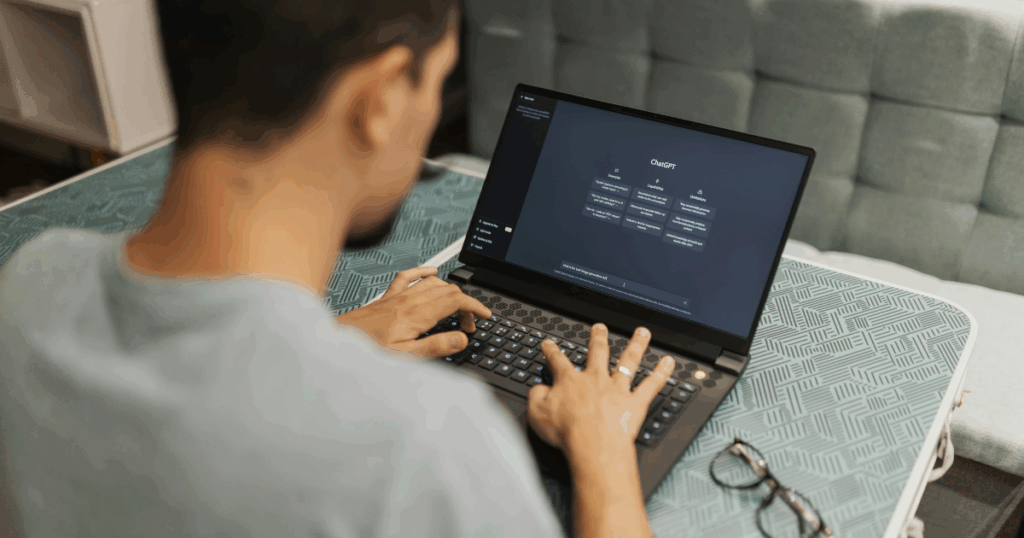
AI is spreading its wires across the academic world, and its impact is becoming increasingly evident. In June 2025, a student showed off his computer with a ChatGPT tab open during his graduation ceremony, later explaining that the tool had been essential throughout college—and even encouraged by professors.
As we discussed in Rethinking Higher Education for the AI Era, there is nothing intrinsically wrong with incorporating AI in the classroom. However, recent reports from CNN revealed that 90% of students use AI to complete their homework, which inevitably raises the question: Are young students starting to lose their ability to think for themselves because of AI?
Unfortunately, a new study by researchers at MIT’s Media Labs supports this theory. Which leads us to wonder: How can we help students regain control of their own thinking?
Keep reading to find out how Reliance College’s learning method—the Socratic Practice—tackles this issue and boosts critical thinking skills.
How Does AI Hurt Critical Thinking?
TheMIT study sheds some light about the impact of ChatGPT on different individuals. The researchers divided the participants into three groups and asked each to write several SAT essays using ChatGPT, Google’s search engine, or no tool at all, while monitoring their brain activity.
Evidence indicates that the group using ChatGPT “consistently underperformed at neural, linguistic, and behavioral levels.” Over the course of the study, the essays became very similar to each other, and the subjects’ brains showed low attentional engagement. Additionally, these essays were described as “soulless” by two teachers who were part of the study.

Researchers concluded that using AI weakens critical thinking skills and could harm learning, while also making students less motivated and lazier—the final essays ended up being little more than copy-and-paste.
It is worth noting that the “brain-only” group “reported higher satisfaction and demonstrated higher brain connectivity compared to the other groups.” While the researchers acknowledge the many conveniences of AI, they want to make it clear that “this convenience came at a cognitive cost, diminishing users’ inclination to critically evaluate the [AI’s] output or ‘opinions.’”

Sadly, the scope of the consequences doesn’t just impact school—it affects work, decision-making, and everyday problem-solving:
- 58% of employers find recent graduates unprepared for the workforce.
- 38% prefer hiring older employees.
- Nearly half of employers have had to let a recent graduate go.
For more details, see the article Adapting to AI: The Case for a Liberal Arts Education. While this technology slowly creeps into the business world, it’s not only important for students to develop a healthy approach to AI, but also for educators to adopt teaching methods that protect and boost critical thinking.
A Method to Boost Thinking: Collaborative Socratic Practice
In the face of this pivotal issue, Reliance College offers students the collaborative Socratic Method. This practice is a way of learning through group discussion, in which students ask questions, listen to each other, and use evidence from a text, or common object of study such as an artwork, to support their ideas. Instead of being told what to think, during collaborative Socratic Seminars, students explore complex topics together and learn to think for themselves—without relying on lectures or authoritative opinions.
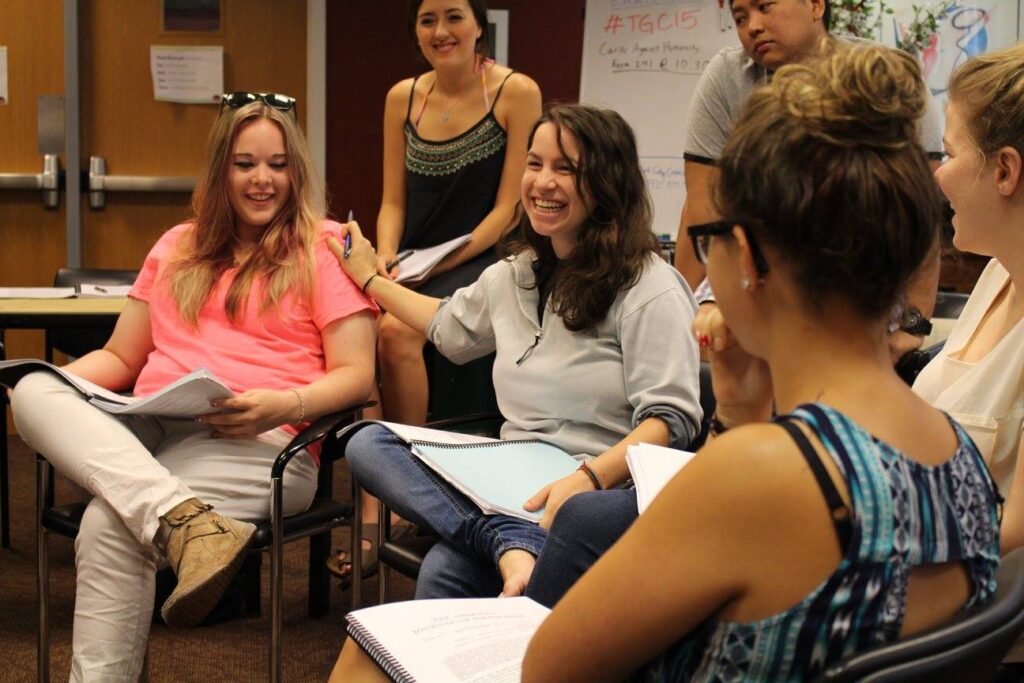
At Reliance, collaborative Socratic Practice is guided by principles such as personal responsibility, respectful engagement, and logical reasoning. The positive impact of this method on students has been analyzed by Reliance College advisory board member Michael Strong in The Habit of Thought: From Socratic Seminars to Socratic Practice.
According to Strong’s findings:
- Students engaging in collaborative Socratic Practice can improve their critical thinking by 30% to 84%, as measured by a Watson-Glaser test at four high schools around the United States.
- In Michael Strong’s study, one 9th-grade group improved from below the national 9th-grade average to above the 12th-grade average within just one year.
- Educators using this method aim to help students learn how to find the right answers on their own.
- Collaborative Socratic Practice uses Great Books classics because they integrate ideas from multiple domains, helping students deepen and broaden their understanding.
You can learn more about how the Socratic Method works in Socratic Practice: A Powerful Method for Learning.
Which Future Do We Want?
Artificial Intelligence is a transformative and useful tool with the power to enable individuals to achieve unbelievable goals. However, to use AI responsibly and without causing harm to the mind, individuals need strong critical and independent thinking skills, as well as the judgment to know how and when to use it.
We can’t prevent students and others from using AI tools, but we can (and must) offer them an alternative to protect and regain control of their minds. Otherwise, they are at the mercy of a technology that steadily grows “smarter” and easier to use and access over time.
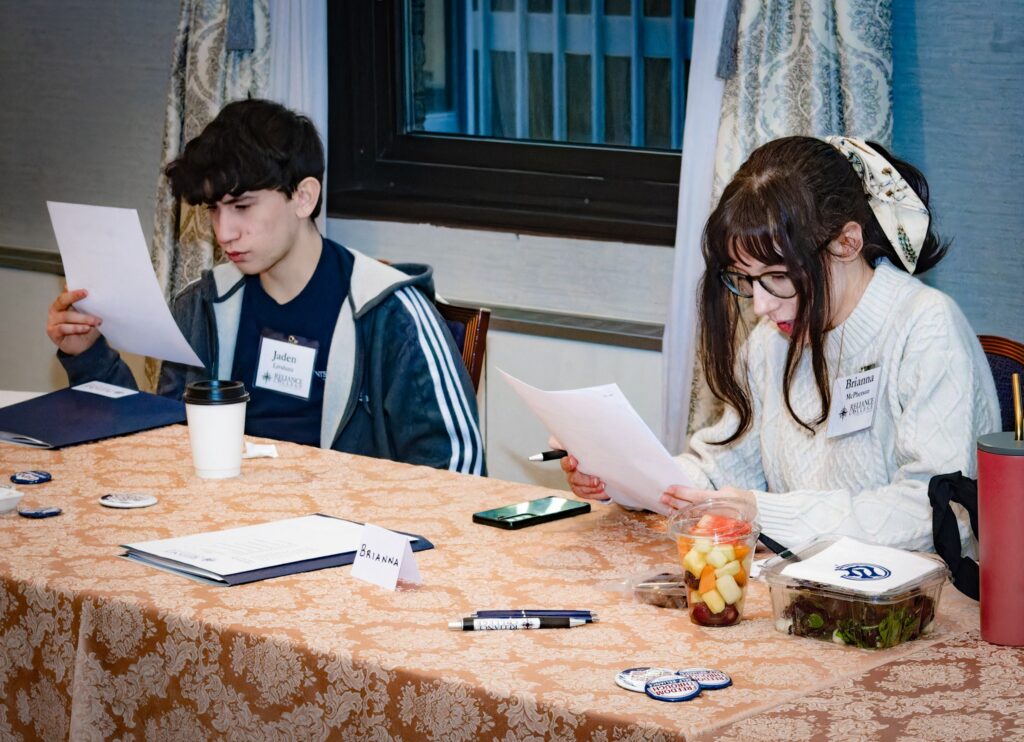
AI can solve millions of problems at the speed of light—but what we need are methods that make us better thinkers, so we can efficiently deploy solutions in areas where AI might not be able to help anytime soon. Instead of heading toward a world where people can’t think deeply without AI, we have the choice to guide students in unlocking the power of their minds with the collaborative Socratic Practice and safely navigate this new era.
“To navigate the stormy waters of life, the difficulties, the disappointments, the setbacks and the failures, students need cognitive skills and plenty of encouragement and emotional fuel. They need great examples of other human beings who have successfully dealt with many difficulties.” —Marsha Familaro Enright, What University Education Might Be and Ought to Be.