

Today, on the birthday of Steve Jobs, it’s worth revisiting one of the most revealing stories about how innovation actually happens.
Jobs once said:
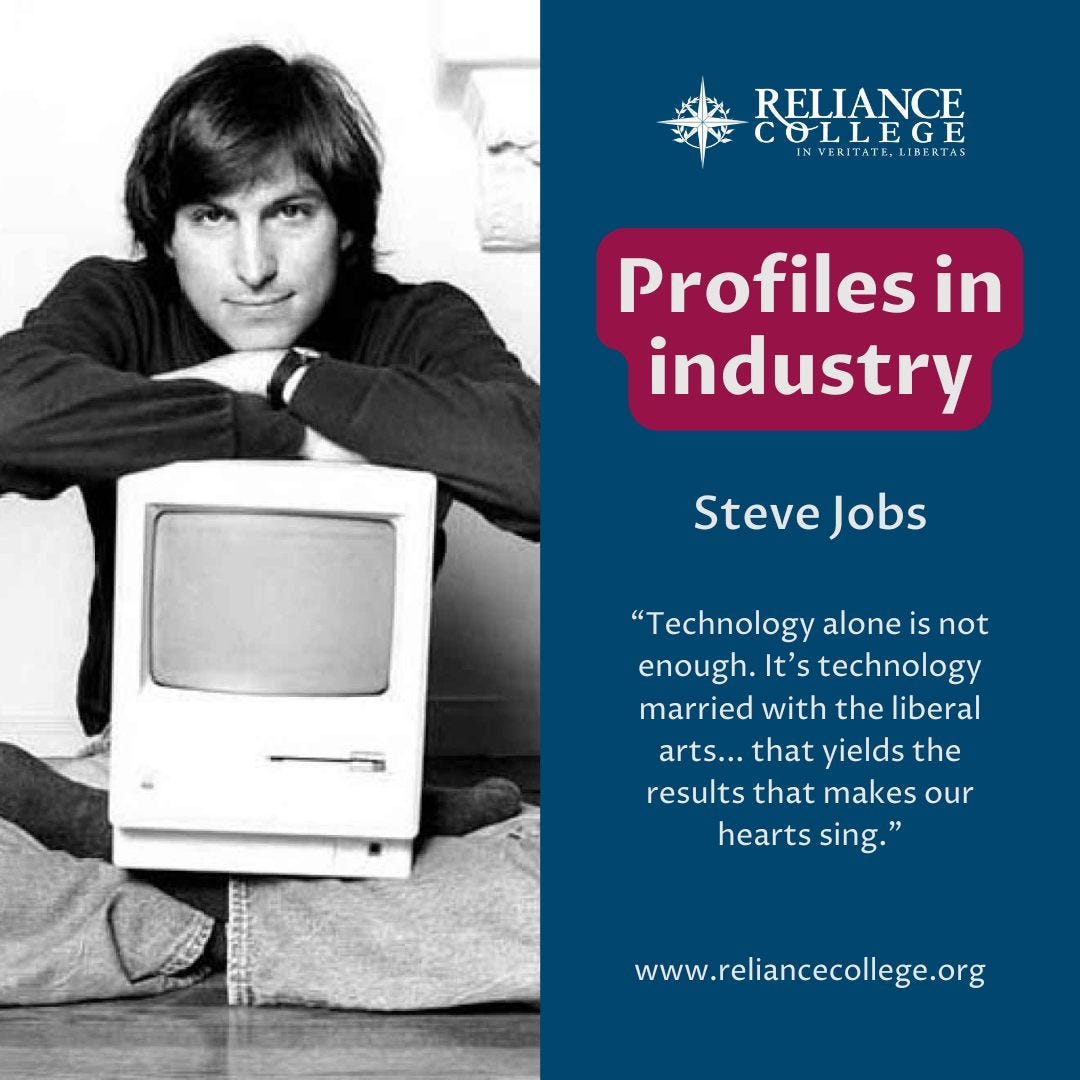
“Technology alone is not enough. It’s technology married with the liberal arts, married with the humanities, that yields the results that make our hearts sing.”
That wasn’t branding language. It was a governing philosophy.
And nowhere is that clearer than in the story of his college calligraphy class.
The “Impractical” Decision
In 1972, Jobs enrolled at Reed College. Six months later, he dropped out. Tuition was expensive, and he didn’t see the value in required courses that didn’t interest him.
But he didn’t stop learning. He began auditing classes purely out of curiosity — including a course in calligraphy.
There was no obvious career payoff. Personal computers were primitive. Typography seemed ornamental at best. Yet the class captivated him.
He learned about serif and sans-serif typefaces. Proportionally spaced fonts. The subtle space between letters. How visual form shapes emotional response. How beauty communicates before logic does.
Years later, while building the Macintosh, those lessons resurfaced.
Until then, computers displayed rigid, monospaced text, functional, mechanical, and soulless.
Jobs insisted the Mac include multiple typefaces and proportionally spaced fonts. Engineers pushed back.
It added complexity. It wasn’t “necessary.” But he understood something deeper: design shapes experience.
“If I had never dropped in on that single calligraphy course,” Jobs later said, “the Mac would have never had multiple typefaces or proportionally spaced fonts.”
And because Windows later adopted similar typography, that decision influenced the entire personal computing industry.
A humanities class changed technology.
The Real Lesson
The story is often told as a charming anecdote about creativity.
But its deeper lesson is about judgment. At the moment Jobs took that class, there was no spreadsheet proving its ROI. No predictive model showing typography would become commercially decisive.
He wasn’t optimizing for credentials. He was developing taste. He was strengthening perception, and learning to see nuance. Jobs was cultivating aesthetic and intellectual sensitivity. That internal development later shaped external innovation.
In today’s AI-driven economy, that lesson is even more urgent.
Artificial intelligence can now generate code, design interfaces, summarize research, and automate workflows. Technical execution is becoming easier and more accessible. What remains scarce is discernment.
AI does not possess taste. It does not weigh moral consequences. It does not decide what is worth building.
It executes. Humans must judge.
Why This Matters Now
On Steve Jobs’ birthday, the temptation is to celebrate visionary entrepreneurship or product genius.
But perhaps the more relevant tribute is this: Innovation begins long before the product launch. It begins in the cultivation of judgment.
Jobs unified engineering with philosophy. Design with psychology. Technology with the humanities.
That integration is not accidental. It must be trained.
And that is precisely why we created AI Proof U™.
AI Proof U is a hybrid executive-style program built for an economy where tools are abundant but judgment is rare. It develops the intellectual architecture that allows leaders to guide powerful technologies responsibly and strategically.
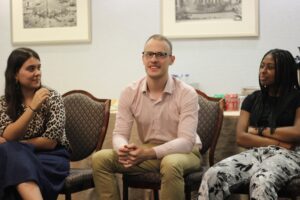
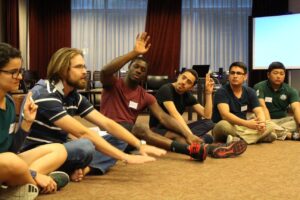
Participants engage in structured collaborative Socratic dialogue, applied business analysis, and real-world problem framing. Through in-person intensives in Chicago and live virtual seminars, they strengthen the habits of mind that shaped leaders like Jobs:
• Thinking from first principles
• Questioning assumptions
• Evaluating tradeoffs under uncertainty
• Communicating reasoning with clarity
• Integrating ethics, economics, and strategy
We do not assume the future belongs to those who simply master more tools. We believe it belongs to those who can decide what tools should be used — and why.
Jobs’ calligraphy class did not teach him to code faster. It trained him to see differently.
In an age where AI can execute at scale, that capacity — to see, to discern, to judge — becomes the defining advantage.
On his birthday, the most fitting way to honor Steve Jobs is not just to admire his products. It is to cultivate the kind of mind that made them possible.
Technology alone is not enough.
If you want to strengthen the judgment and integrated thinking that today’s economy rewards, AI Proof U™ begins March 13.
Apply at the link here — and build the internal architecture that allows you to lead, not just execute.