

The shocking assassination of Charlie Kirk on a Utah campus is more than another episode of political violence. For many Americans — left, right, and center — it feels like a breaking point. As one man told The New York Times, “This could happen to anybody in this country.” What was once assumed to be a basic value — that we do not shoot people for their political opinions — has been shattered.
When political disagreement turns deadly, we lose the foundation of a free society.
This tragedy comes against a backdrop of worsening despair among young people. Even before COVID, suicide was the second-leading cause of death for ages 15–20, with rates in children quadrupling between 2007 and 2020. The pandemic only deepened the crisis. A Wall Street Journal report on the class of 2024 described students who still eat alone in their dorms, attend class online, and are more anxious, lonely, and disengaged than their predecessors. Faculty say students are less prepared, less resilient, and less willing to engage with others.
Against this fragile psychological landscape, the killing of a prominent political figure has intensified the fear that free expression itself is unsafe. Instead of colleges as “town squares” of lively debate, students retreat into ideological silos or the anonymity of social media, where friendships can be destroyed with a single post. As one Michigan student told the Times, “Sometimes when the conversation veers toward politics in a mixed space, things feel tense.”
Students today report losing friendships over a single Instagram post about the Israel–Palestine conflict. Fear of saying the “wrong” thing online keeps many silent, further deepening their loneliness. Add technology deliberately designed to addict, and it’s no wonder students are anxious, withdrawn, and less willing to take the risks needed for growth.
Why the Young Are Vulnerable
As Reliance College founder Marsha Familaro Enright has long argued, human beings are wired to grow by facing challenges. From learning to walk to pursuing meaningful work, young people need purpose, hopeful visions of the future, and inspiring examples of heroism. Without these, they drift into despair — or into the false solidarity of extremist movements.
The Wall Street Journal notes that many no longer uphold the belief that violence is never an acceptable reply to speech: “While 93% of baby boomers and 86% of Generation X say violence is never acceptable, only 71% of millennials and 58% of Generation Z do. And, there’s no meaningful difference between the attitudes of 18- to 26-year-olds who are and who aren’t enrolled in college.”
The disturbing reality of this cultural shift was on display when celebratory reactions to Charlie Kirk’s assassination appeared online, from ordinary social media users to prominent figures such as the Oxford Union president-elect.
This erosion of civic norms is visible not only in violent acts, but in the disappearance of the very language that once guided peaceful disagreement. Expressions like “Everyone is entitled to their own opinion” or “Sticks and stones may break my bones, but words will never hurt me” once reinforced the habit of meeting speech with speech, not violence.
Yet surveys show younger Americans rarely use these idioms, replacing them with slogans such as “words are violence.”
Contemporary culture too often gives young people the opposite of a positive vision. The drumbeat of climate catastrophe, warnings of AI doom, and constant denunciations of capitalism create a bleak vision of the future.
In popular culture, heroes are replaced by anti-heroes or villains. Films like The Joker glorify nihilism and make productive achievement suspect. Instead of celebrating courage and creativity, much of our media seduces the young into cynicism.
Add to this what Enright calls the “giant online village,” where the internet magnifies conformity, erases privacy, and punishes independence, and the result is a generation highly susceptible to propaganda, peer pressure, and despair. Far too often, political debate is tragically turning to dehumanization, exacerbated by social media.
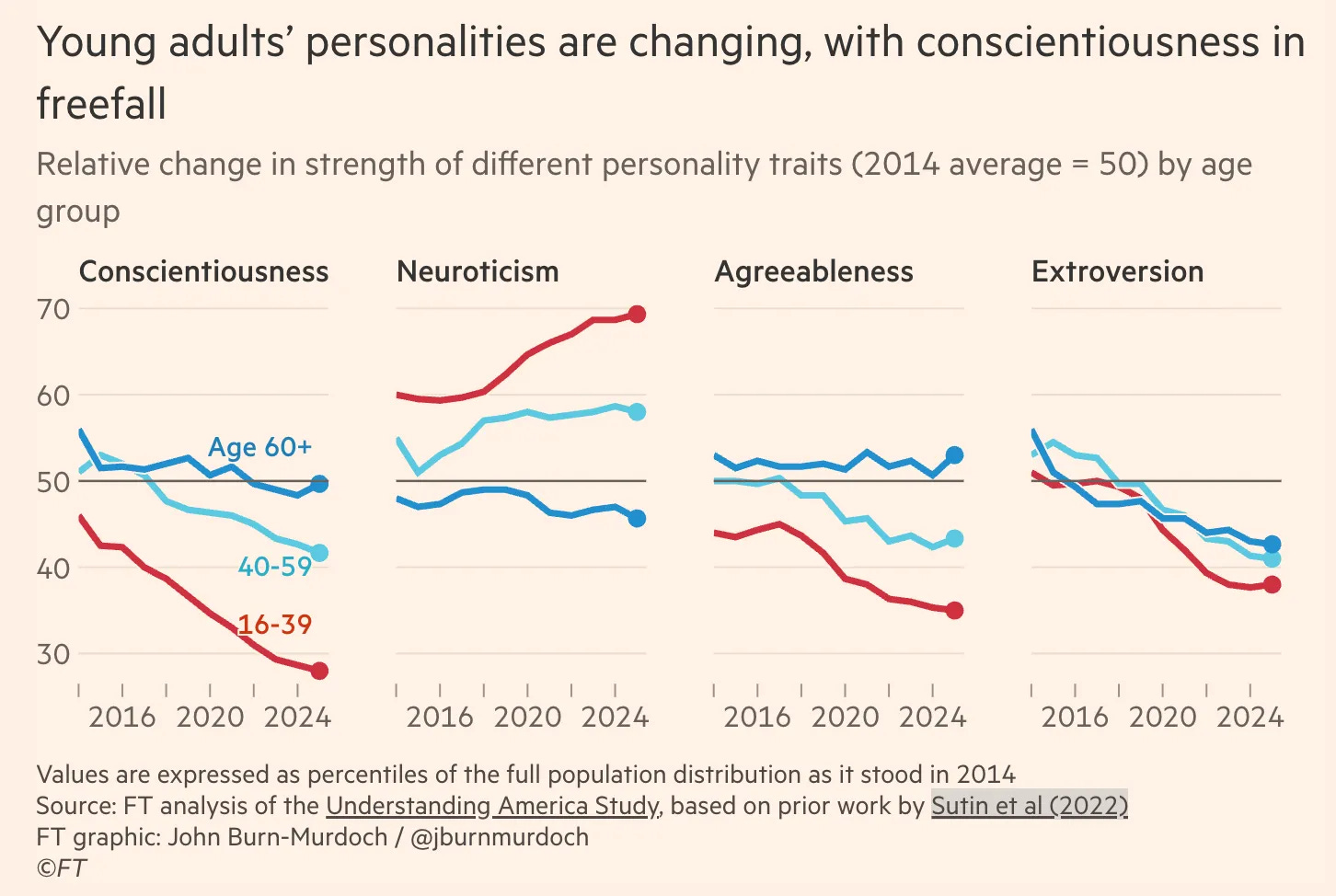
This Financial Times analysis of USC data shows that young people today are becoming less conscientious, agreeable, and extroverted while growing more anxious and depressed—a troubling shift linked to social media, economic pressures, and a loss of purpose.
A Path Forward
Charlie Kirk’s death should remind us of what is at stake: without intellectual independence, without resilience, free society itself is endangered. How do we respond?
- Rebuild confidence in freedom. Young people must be taught the foundations of individual rights, free speech, and responsibility. A free society depends on citizens who can reason for themselves rather than resort to violence.
- Cultivate intellectual independence. Schools should foster discussion and reasoning, not indoctrination. Students who can analyze arguments and stand on their own judgment are far less vulnerable to propaganda and rage.
- Offer heroes, not nihilism. We must deliberately curate stories — in books, films, games, and history — that show human greatness, courage, and redemption. From Top Gun: Maverick to Les Misérables, such stories remind the young that life can be an adventure worth the striving.
- Model purpose. Parents, teachers, and mentors should show why their own work matters. Children need to see adults as heroes of productivity and integrity.
Conclusion
The killing of Charlie Kirk has left many Americans shaken — not only by the violence itself, but by what it symbolizes: a nation where reason is losing to rage. Combined with the pandemic’s legacy of isolation and a culture of cynicism, the danger is clear.
But despair is not inevitable. By teaching freedom, fostering independence, and surrounding the young with uplifting models of human achievement, we can help them resist despair and violence — and rebuild a society where differences are debated, not destroyed.
That’s what we aim to do at Reliance College.