

The job market is evolving unpredictably. Jobs that used to be in high demand are becoming obsolete, and brand-new roles are steadily emerging—challenging individuals to adapt faster. While change has always been part of the job market’s very nature, the rapid advancement of artificial intelligence is quickly compounding the situation.
Two major crises are unfolding simultaneously:
- The collapse of entry-level jobs.
- Professionals’ lack of adaptability when their roles disappear or evolve.
In this volatile landscape, the most powerful advantage is no longer technical specialization but a foundation in the humanities. The liberal arts and the Great Books develop skills that enable individuals to adapt to rapid change.
Keep reading to find out how an education in the liberal arts can help solve these two issues.
The Problem: Two Crises Collide
The first issue is related to the structural shift in many industries driven by the rise of AI, which is automating foundational tasks and replacing early-career positions. Oxford Economics reports growing signs of industries adopting this technology and replacing job positions that used to be covered by recent graduates.

Entry-level opportunities have always been the stepping stones enabling recent grads to land a job in their majors—but now the landscape has changed, and this is no longer guaranteed. New graduates are facing higher unemployment rates and murky career entry paths, especially in computer and mathematical sciences.
However, unemployment itself is not the main issue—70 million new jobs are projected to be created this decade. According to Indeed Hiring Lab, “Job openings are increasingly concentrated in fields that may not align with every grad’s aspirations.” Employment in skilled trades and non-college roles is rising, making some degrees feel obsolete and college less appealing.
This creates a complex dilemma for recent college graduates and people deciding which path to follow after high school. An analysis by Bloomberg estimates that AI could impact nearly 50 million U.S. jobs in the near future. This situation has led many to view college as a potential waste of money, with a recent survey finding that 49% of Gen Z believe AI is devaluing their degrees.
Unfortunately, these concerns are increasingly validated by research, as the same report shows that AI could take over more than half of the tasks in certain white-collar fields. Recently, Amazon’s CEO Andy Jassy stated that due to the arrival of AI, “We will need fewer people doing some of the jobs that are being done today, and more people doing other types of jobs.” This statement ties perfectly with the second issue currently impacting the job market: professionals’ lack of adaptability.
Oxford Economics’ studies show how difficult it is for people who have lost long-standing jobs to find new employment. Specialized graduates are currently struggling to pivot when their field shifts or disappears, as they lack the versatility needed to adapt. Professionals with specific degrees may perform well in sectors that remain stable over time; however, their skills can quickly become irrelevant when industries evolve, and what they learned in college is no longer useful.
The traditional education system has focused on training students to fill specific roles rather than equipping them with the skills to respond to a changing world—and the consequences are now more evident. Unfortunately, everything indicates that these issues are likely to grow even more complex moving forward.
Unprepared College Graduates and the New Necessities of the Marketplace
To make things even more complicated, AI is also interfering with the way students acquire knowledge and develop their independent thinking. As ChatGPT becomes a go-to resource for college students, graduates are showing weaker critical thinking skills. Recently, a video went viral on Twitter/X showing a student at his graduation ceremony displaying the ChatGPT he used to obtain his degree.
While this could have been just an isolated case, CNN reports revealed that 90% of students use the chatbot to do their homework. Additionally, other studies show that 63% of employers say recent college grads are unprepared for the workforce. This is an issue that stems partly from America’s outdated educational system, whose shortcomings have now been exposed by the rise of AI. You can find a more detailed discussion on how the academic project should adapt to the ChatGPT era here.
In short, mistrust of graduates, disappearing roles, AI pressures, and professionals who can’t adapt all add up to an ominous picture for the future.
With all this in mind, we should ask ourselves: What can individuals do to prepare for both the gradual disappearance of entry-level jobs and the growing need for adaptability as their roles are increasingly replaced or transformed by AI?
The New York Times stated that the future minds of America will need to learn how to leverage AI to their advantage and, more importantly, develop “novel ideas about how to deploy it to solve problems.”
This environment demands a different kind of preparation—one rooted not in specific job skills, but in the ability to think, adapt, and create. So, what should people study in this rapidly changing world? Can education equip students with the right tools?
The Liberal Arts: A Broader Mind for a Narrower Market
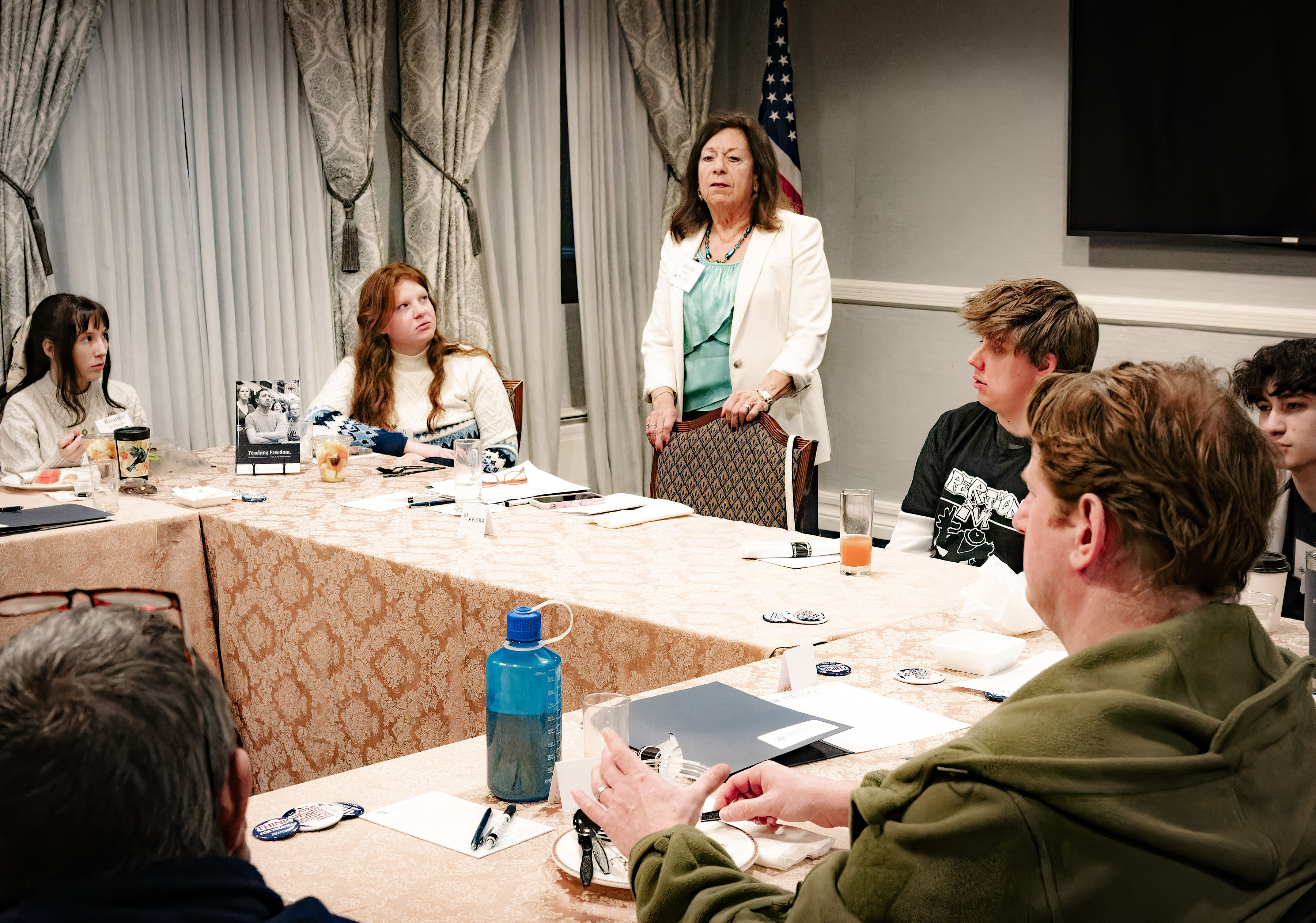
A potential solution lies in the Great Books’ ancient teachings. By pursuing a liberal arts degree, students are not spoon-fed fixed information to memorize; instead, as described by Reliance College founder Marsha Familaro Enright, they acquire “objective reasoning skills, not just in science and math, but all domains of knowledge, including such areas as art, history, and literature.”
Reliance College offers students real-world, cross-domain learning experiences that foster curiosity, critical observation, and pattern recognition. These experiences help individuals develop independent thinking skills and an entrepreneurial mindset far beyond what’s learned in standard education.
Successful individuals like Replit CEO Amjad Masad advise students that “instead of learning how to code,” they should “learn how to think, learn how to break down problems, learn how to communicate clearly.” This mindset perfectly aligns with the approach Reliance promotes.
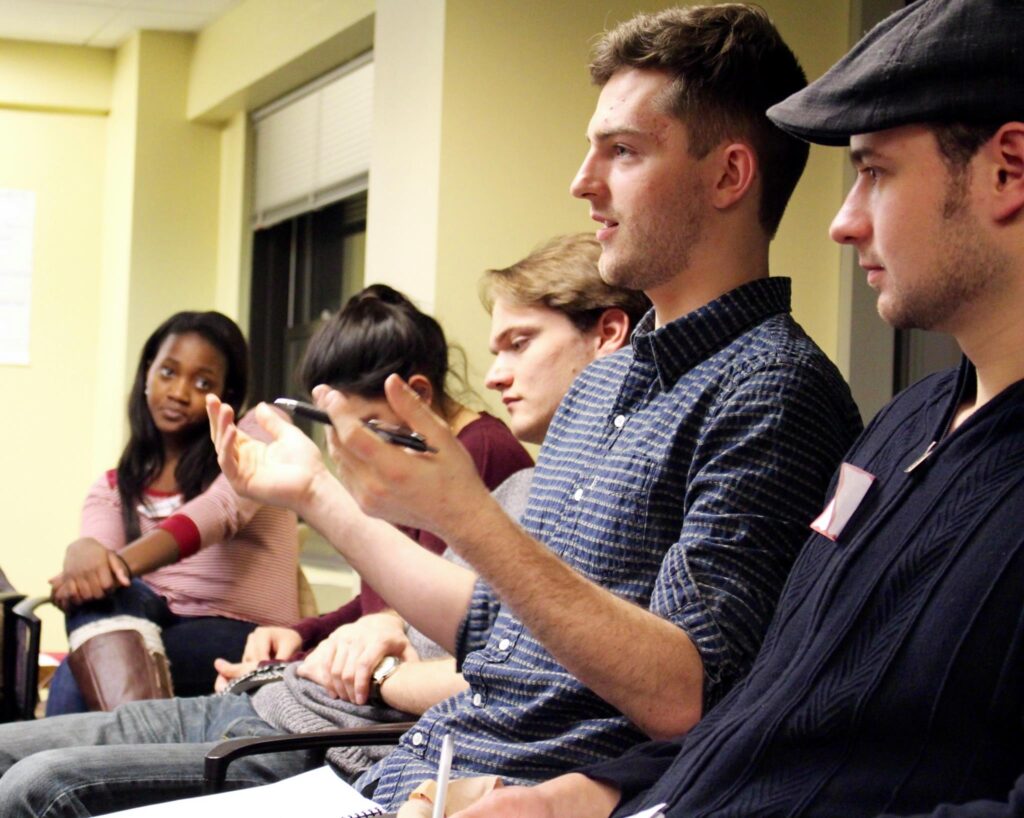
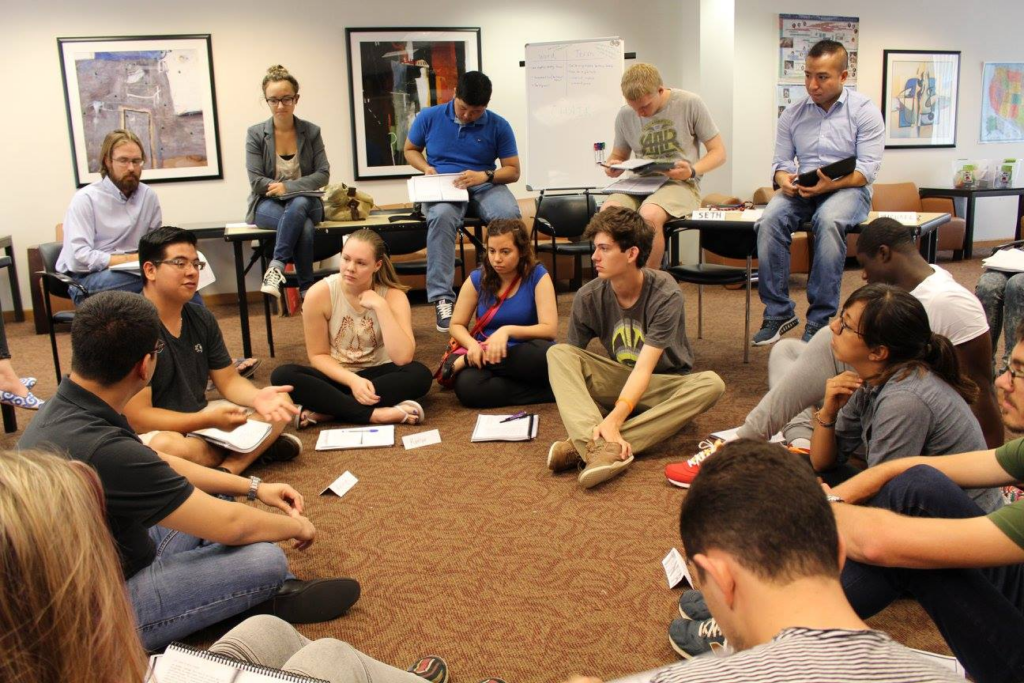
Individuals trained in the liberal arts through the collaborative Socratic seminar method are better equipped to navigate the two main issues we have outlined in this article. The Great Books do not just train students for a single job or activity—they open up a range of possibilities, giving them multiple paths into the job market and helping them surf the wave of change rather than be swept away by it.
“Instead of learning how to code, learn how to think, learn how to break down problems, learn how to communicate clearly.”
Amjad Masad, Replit CEO
The liberal arts teach students to “analyze problems like a philosopher and solve them like an entrepreneur.” This type of education encourages initiative and a leadership-driven attitude—students learn how to create value, not just fill a job description.
Participants in collaborative Socratic programs have demonstrated up to an 84% improvement in cognitive skill development, enhancing their critical thinking, persuasive communication, self-direction, and adaptability. By doing so, they become potential job creators, which is crucial in a world where AI will gradually take over millions of jobs. For more details, see the article Unlocking the Entrepreneurial Mind.
Looking Ahead
AI has flipped the job market, and rigid expertise is no longer enough—someone can be the best at a given role, but without adaptability, their skills may end up as relics of a world that no longer exists. In a future defined by change, it is not the most specialized who win, but the most adaptable. “We cannot change what nature gives our students in terms of basic intelligence. However, we can offer a program that nurtures those abilities and habits of mind needed for creativity,” Marsha Familaro Enright.